Delaware River Drainage
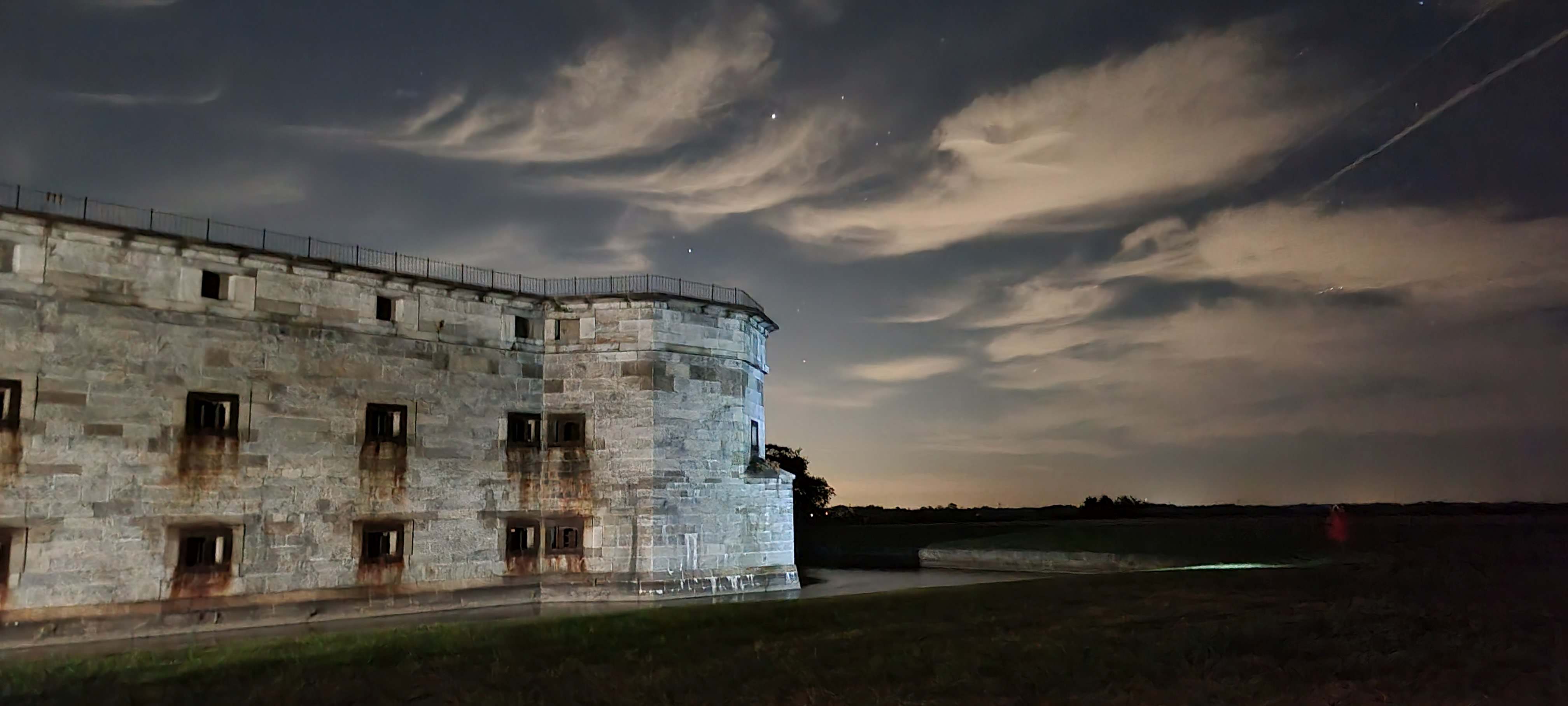
Fort Delaware at night
Photo credit:Erin Chronister
Photo credit:Erin Chronister
Other watersheds in the Delaware Bay and Estuary Basin
Square Miles: 6.5
Population*: 17,047
States: DE
Counties: DE: New Castle
Land use† in Delaware River Drainage
Appoquinimink River • Army Creek • Blackbird Creek • Broadkill River • C & D Canal East • Cedar Creek • Delaware Bay Drainage • Dragon Run Creek • Leipsic River • Little Creek • Mispillion River • Murderkill River • Red Lion Creek • Smyrna River • St. Jones River
Background
The Delaware River watershed drains directly to the Delaware River and Estuary.
This watershed is heavily urbanized with some areas of forest.
This watershed is heavily urbanized with some areas of forest.
Water Quality
There are no nutrient or bacteria Total Maximum Daily Loads in the Delaware River watershed.
This watershed has sites sampled for a consistent suite of environmental contaminants. These contaminants are broadly classified as Volatile Organic Compounds (VOCs), Semi-Volatile Organic Compounds (SVOCs), Pesticides, Polychlorinated Biphenyls (PCBs) and Metals as listed using USEPA and DNREC defined standards. When sites are adjacent to water bodies sediment samples are collected to assess potential impact from a site on the health of the waters. Learn more information specific to this watershed from the DNREC Advanced Facility Search Tool.
This watershed has sites sampled for a consistent suite of environmental contaminants. These contaminants are broadly classified as Volatile Organic Compounds (VOCs), Semi-Volatile Organic Compounds (SVOCs), Pesticides, Polychlorinated Biphenyls (PCBs) and Metals as listed using USEPA and DNREC defined standards. When sites are adjacent to water bodies sediment samples are collected to assess potential impact from a site on the health of the waters. Learn more information specific to this watershed from the DNREC Advanced Facility Search Tool.
Plants and Wildlife
Delaware’s Department of Natural Resources and Environmental Control (DNREC), Division of Fish and Wildlife conducts on-going inventories of natural communities as well as rare and declining species, (e.g., state and globally-rare plants, birds, insects, mussels, reptiles, and amphibians). It maintains a database, both electronic and manual, of its findings throughout the state. Learn more about the wildlife and plant communities in this watershed from the DNREC Division of Fish and Wildlife Conservation Programs.
In addition, the Division of Fish and Wildlife, working with the University of Delaware’s Institute for Public Administration – Water Resources Center, maintains online databases about plants and plant communities in Delaware. Learn more about the plant communities in this watershed from the DNREC Division of Fish and Wildlife.
In addition, the Division of Fish and Wildlife, working with the University of Delaware’s Institute for Public Administration – Water Resources Center, maintains online databases about plants and plant communities in Delaware. Learn more about the plant communities in this watershed from the DNREC Division of Fish and Wildlife.
Further Resources
For more detailed information on this watershed, its water quality and resources, check out the following resources:
Delaware Whole Basin Reports
CCMP for the Delaware Estuary
Delaware Whole Basin Reports
CCMP for the Delaware Estuary
Delaware River Drainage
Delaware River Drainage quick stats
Square Miles: 6.5
Population*: 17,047
States: DE
Counties: DE: New Castle
*US Census Bureau, American Community Survey, 5-year estimates, 2019
Land use† in Delaware River Drainage
†Land use source: U.S. Geological Survey (USGS), 2024, Annual NLCD Collection 1 Science Products (ver. 1.1, June 2025): U.S. Geological Survey data release, https://doi.org/10.5066/P94UXNTS.